
Tottori crab and local food
Tottori crab is the dish the prefecture is best known for, but the local table is wider than that. The main foods are Matsuba crab in winter, Nijisseiki pears in late summer, Tottori Wagyu beef and a regional ramen made with beef bone broth. Choosing among Tottori restaurants is a matter of season more than of address, so this page is organised by food and by when it is at its best.
Prices and menus are not listed here because they change from place to place and from year to year. The aim is to help you match your travel dates to the food you want to eat.
Our pick: a sushi-making class
A 90-minute class in Yonago where you make sushi and then eat the seven pieces you prepared.
Hand-picked tours, booked through GetYourGuide. Prices are indicative starting prices in US dollars (as of October 2026). Tap a tour for live availability and the current price in your currency.
Food experiences in Tottori
A sushi class and a three-stop izakaya walk in Yonago, with live prices and availability.
Matsuba crab season
Winter is crab season on the Sea of Japan coast.
Matsuba is the name for hard-shelled adult male snow crabs, caught as Zuwai crab. Female crabs are called Oyagani locally, and freshly moulted males are called Wakamatsuba. They are different products with different seasons, so do not treat them as the same item.
The season is set officially each year. For 2025/26 the prefecture listed Matsuba from 6 November to 20 March. Oyagani followed a voluntary end on 31 December instead of the latest legal end of 20 January, and Wakamatsuba was set at 1 February through 20 February, shorter than before. These dates describe that past season only. The rules are reviewed each season, so ask your accommodation or a market for the dates before you book a trip around crab.
A winter trip that centres on crab can also include an onsen town. Our weather page explains the snow and the cold in the same months.
Nijisseiki pears
A pear with a date: 1904.
Nijisseiki pears came to Tottori in 1904, when Eiji Kitawaki brought ten seedlings from Chiba. The prefecture gives the main outdoor harvest as late August to mid September, with greenhouse fruit in early to mid August. Not every pear sold in Tottori in autumn is a Nijisseiki, so look for the name if you want this one. The story of the pear is part of our history of Tottori.
Tottori Wagyu and Olein 55
What the label means.
The prefecture defines Tottori Wagyu as Japanese Black cattle raised in Tottori, excluding cows that have already calved, with a meat quality grade of at least 3 and sold through the named prefectural beef association and markets. Not all local beef counts as Tottori Wagyu, so the label is worth reading on a menu.
Olein 55 is a separate selection brand within Tottori Wagyu. Among its conditions are an oleic acid share of at least 55 percent in the measured fat and Ketaka lineage. This does not mean that every cut from an animal reaches that fat value.
Gyukotsu ramen
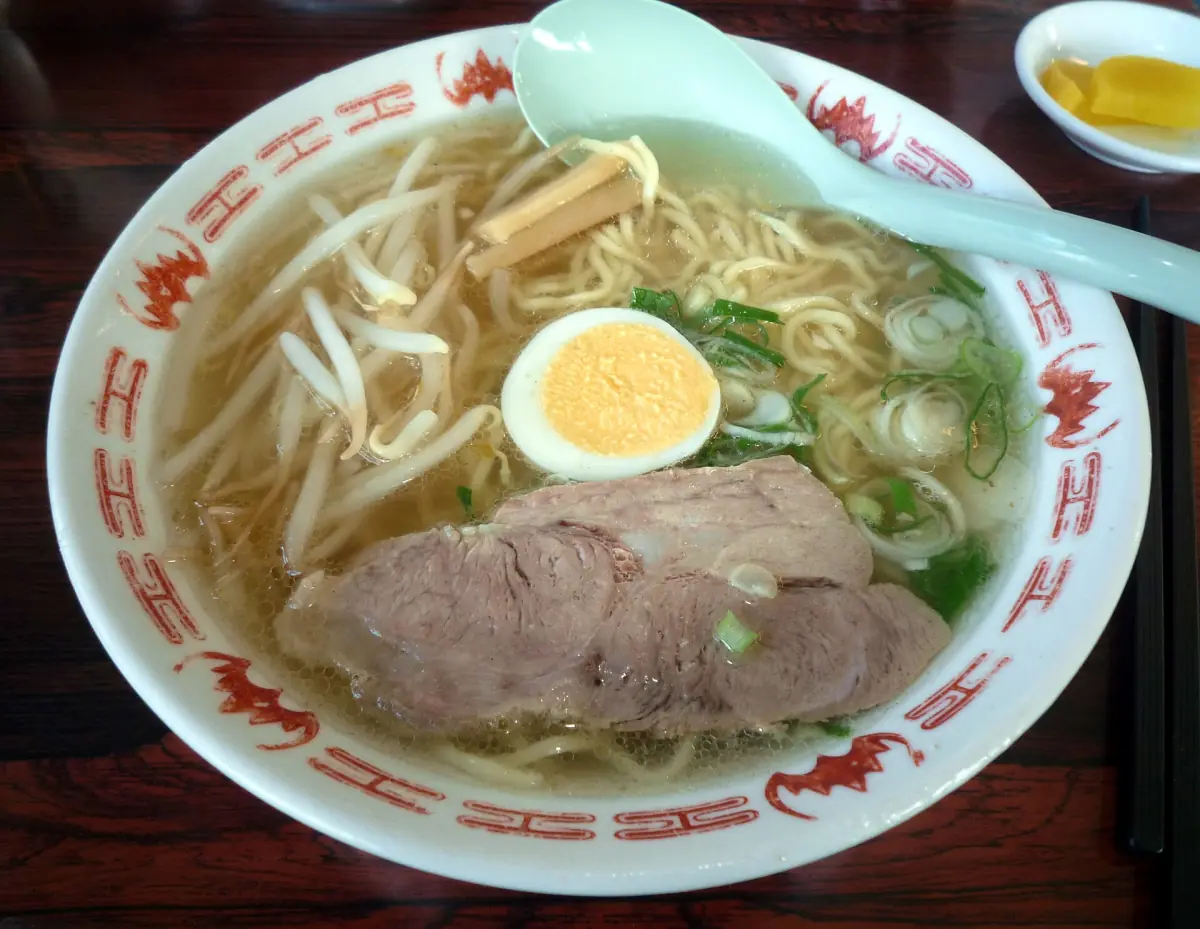
Gyukotsu means beef bone. The ramen is made with a broth from beef bones, typically seasoned with soy sauce, and it is common in the central part of the prefecture, including Kotoura and Kurayoshi. The bowl in the photo has egg and sliced beef, but the topping is not the same everywhere, so treat the broth as the defining feature. If you are in the old town of Kurayoshi, see our Kurayoshi page for the area.
Where to buy seafood
Two retail markets on the coast.
Karoichi in Tottori City
A retail seafood market in the harbour district of Karo, reached by bus from Tottori Station in about 35 minutes. Shops keep their own hours. See Tottori City.
Sakaiminato fish sales centre
The direct sales centre for seafood in Sakaiminato is a retail centre, not the fishing port or wholesale market. The city map lists 08:00 to 16:00, with an earlier end when stock runs out, and Tuesday closed. See Sakaiminato.
Sushi-making class in Yonago
The class lasts about 1.5 hours, ingredients are included and you eat seven pieces of sushi you made yourself. Tea or water comes with it.
Tottori crab and food: questions
When is crab season in Tottori?
For 2025/26 the Matsuba season ran from 6 November to 20 March. The dates are decided each year, so ask before you plan a trip around crab.
What is Matsuba crab?
Matsuba is the name for hard-shelled adult male snow crabs. Females are called Oyagani and freshly moulted males Wakamatsuba.
Is every Tottori beef called Tottori Wagyu?
Not automatically. The prefecture defines Tottori Wagyu by breed, rearing, grade and trade channel. Olein 55 is a separate selection brand within it.
What is gyukotsu ramen?
It is ramen with a beef bone broth, typically seasoned with soy sauce. The toppings vary.